


Scroll Compressor Water Chiller for Plastic Injection Industry
For this reason, we adopt international standards introducing advanced domestic and foreign technical production lines and combining our own rich production experience to ensure Hot Water Type Electric Control Valve, Hot Water Chiller For Shuangliang, Free Lithium Bromide Solution Sample is scientific with comprehensive functions. We provide advanced technology, mature products and perfect service to our customers. We build staff development channels, enhance the comprehensive value of employees, so that the talents of employees can be fully developed, and guide the growth and development of employees. Based on a global perspective, we actively participate in industry exchange activities, making us progress in the exchange. We have various excellent employees, responsible for product development, design, production and sales.
Shell-and-tube heat exchanger for Sanyo chiller
Heat Exchanger

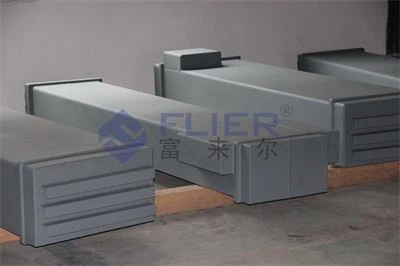


Condensate heat exchanger

High hair furnace


Customized processing site construction
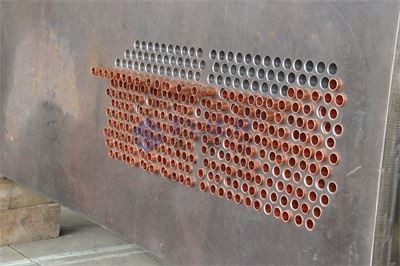

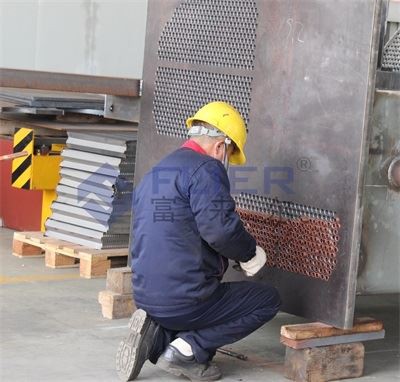
Matching drawing

Principle of Shell and Tube Heat Exchanger:
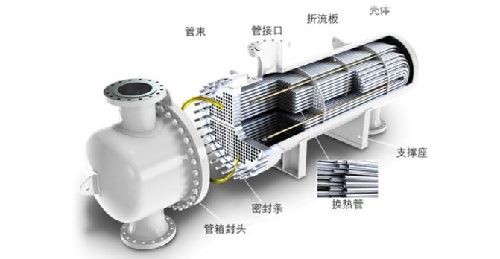
Shell and tube heat exchanger is a kind of heat exchanger with very common applications. Its application can be seen in the fields of thermoelectricity, factories and mines, petrochemicals, urban central heating, food and medicine, energy electronics, machinery and light industry. The shell and tube heat exchanger has a simple structure, consisting of a shell, a heat transfer tube bundle, a baffle plate (baffle) and a tube box. The tube side fluid passes through the tube box head and splits with the tube shell side through the baffle plate. The baffled fluid exchanges heat.
The commonly used heat exchanger types of Sanyo chillers are: plate heat exchanger and shell-and-tube heat exchanger.
Advantages and disadvantages of plate heat exchanger and shell-and-tube heat exchanger
Advantage
1. High heat transfer coefficient
The structure of the shell-and-tube heat exchanger is very good in terms of strength, but it is not ideal from the perspective of heat exchange, because there are baffles-shells and baffles-heat exchange when fluid flows in the shell side. Tube, tube bundle-the bypass between the shell. The fluid passing through these bypasses does not fully participate in heat exchange. In the plate heat exchanger, there is no bypass, and the corrugation of the plate can cause the fluid to generate turbulence at a small flow rate. Therefore, the plate heat exchanger has a higher heat transfer coefficient, which is generally considered to be 3 to 5 times that of the shell-and-tube heat exchanger. To complete the same heat exchange task, compare the shell-and-tube heat exchanger with the plate-type heat exchanger; the heat exchange area of the plate heat exchanger is only 1/3 to 1/4 of the shell-and-tube heat exchange area.
2. Large logarithmic average temperature difference
In the shell-and-tube heat exchanger, the two fluids flow in the shell side and the tube side respectively, generally in a cross-flow flow mode. If you further analyze, the shell side is a mixed flow, and the tube side is a multi-stream flow, so the logarithmic average temperature difference should be corrected by a correction coefficient. The correction factor is usually small. The flow of fluid in the plate heat exchanger is generally co-current or counter-current, and its temperature difference correction coefficient is generally greater than 0.8, usually 0.95.
3. Small footprint
The plate heat exchanger has a compact structure, and the heat exchange area per unit volume is 2 to 5 times that of the shell-and-tube heat exchanger. Unlike the shell-and-tube heat exchanger, it is not necessary to reserve a maintenance site for the extraction of the tube bundle (unless it is lifted out for installation) Location for maintenance), so when the same heat exchange task is achieved, the floor space of the plate heat exchanger is about 1/5 to 1/10 of that of the shell-and-tube heat exchanger.
4. Lightweight
The plate thickness of the plate heat exchanger is only 0.5mm, and the thickness of the heat exchange tube of the shell-and-tube plate heat exchanger is 2.0~2.5mm; the shell of the shell-and-tube heat exchanger is much heavier than the frame of the plate heat exchanger . In the case of completing the same heat exchange task, the heat exchange area required by the plate heat exchanger is smaller than that of the shell-and-tube heat exchanger, which means that the plate heat exchanger is lighter in weight and generally only the shell-and-tube type About 1/5 of the heat exchanger.
5. Low price
In the mid-1960s, Frank compared the cost of manufacturing shell-and-tube heat exchangers and plate heat exchangers from various materials, and obtained the relationship curve between the cost per heat exchange area and the heat exchange area (one set). It can be seen from the curve that if stainless steel is used as the material, the price of the plate heat exchanger is lower than that of the shell and tube heat exchanger.
6. Small end temperature difference
In the shell-and-tube heat exchanger, the fluid flowing in the shell side intersects and flows around the heat exchange surface, and there is also a side flow. The flow of the cold and hot fluids of the plate heat exchanger in the plate heat exchanger is parallel to the heat exchange surface, and there is no bypass; this makes the temperature difference at the end of the plate heat exchanger very small, and the water-water heat exchange can be lower than 1°C, while the shell-and-tube heat exchanger is about 5°C. This is very beneficial for recovering heat energy at low temperatures.
7. Low dirt coefficient
The fouling coefficient of the plate heat exchanger is much smaller than that of the shell-and-tube heat exchanger. The reason is that the fluid is violently turbulent and impurities are not easy to deposit; the dead zone of the passage between the plates is small; the heat exchange surface made of stainless steel is smooth, and There are few corrosion deposits; and easy to clean. The fouling coefficient comparison of plate heat exchanger and shell-and-tube heat exchanger is shown in the table below.
8. Multi-medium heat exchange
If the plate heat exchanger has a middle baffle, one device can carry out heat exchange of three or more (multiple middle baffles) media. Multi-media heat exchange plate heat exchangers are often used in dairy processing. Shell-and-tube heat exchangers cannot realize the heat exchange of multiple media in one device.
9. Easy to clean
After removing the compression studs of the plate heat exchanger, the plate bundle can be loosened or the plates can be removed for mechanical cleaning, which is very convenient for the heat exchange process that requires frequent cleaning of the equipment.
10. It is easy to change the heat exchange area or process combination
As long as a few plates are added (or reduced), the heat exchange area that needs to be increased (or reduced) can be achieved. Change the arrangement of the plates or replace several plates to achieve the required process combination and adapt to the new heat exchange conditions.
Disadvantage
1. Working pressure is below 2.5MPA
Plate heat exchangers are sealed by gaskets, the periphery of the seal is very long, and the support of the two seals of the corner holes is poor, and the gaskets cannot get enough pressing force, so the current maximum working pressure of plate heat exchangers Only 2.5MPA; when the veneer area is 1 square, its working pressure is often lower than 2.5MPA.
2. Work stably below 250℃
The operating temperature of the plate heat exchanger is determined by the temperature that the gasket can withstand. When using rubber elastic gaskets, the maximum working temperature is below 200℃; when using compressed asbestos wool gaskets (Caf), the working temperature is 250~260℃. Due to the poor elasticity of compressed asbestos wool gaskets, the working pressure is lower than that of rubber gaskets.
3. It is not suitable for the heat exchange of the medium that blocks the channel
The passage between the plates of the plate heat exchanger is very narrow, generally 3~5mm. When the heat exchange medium contains larger solid particles or fibrous substances, it is easy to block the passage between the plates. For this kind of heat exchange occasions, it should be considered to install a filter at the inlet or adopt a regenerative cooling system.
At present, we have introduced advanced production equipment, strengthened quality inspections, and ensured that the exported Scroll Compressor Water Chiller for Plastic Injection Industry are 100% qualified. Through the integration and modification, we now have our own production technology and many years of production and research and development experience let us obtain more and more customers. We keep our mission in mind with gratitude, and do not forget our original intention.
You Might Also Like


Send Inquiry