

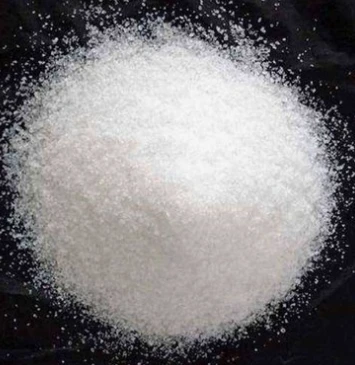
Anhydrous lithium bromide crystal
Anhydrous lithium bromide (LiBr) is a typical alkali metal halide crystal, characterized by ionic bonds. With its extremely high hydration effect, wide temperature range stability, and good ion conductivity, it has key application value in thermal energy storage, electrochemical energy storage, organic synthesis, and extreme environmental regulation. It is a core material in the lithium chemical industry chain that combines traditional functions and expansion potential.
From the perspective of crystal structure, anhydrous lithium bromide belongs to the cubic sodium chloride type structure at room temperature, with a lattice constant of about 0.550 nm. Lithium ions and bromide ions are coordinated in a 6:6 ratio, forming a regular ionic lattice. Its molar mass is 86.85 g/mol, melting point is 552 ℃, boiling point is about 1265 ℃, thermodynamic properties are stable, and it is non-volatile. The most prominent characteristic of this crystal is its strong water absorption: due to the small radius of lithium ions and abnormally high hydration energy, it will quickly adsorb water vapor and gradually dissolve into a concentrated solution when exposed to the atmosphere. At 25 ℃, the solubility in water is 180 g/100g, which increases to about 250 g/100g at 90 ℃, much higher than most alkali metal halides, and the solubility shows a significant positive increase with increasing temperature. Its aqueous solution is nearly neutral to slightly acidic, and in practical applications, a small amount of lithium hydroxide is often added to adjust to weak alkalinity (pH 9-10) to inhibit corrosion of metals. The solution has an extremely low saturated vapor pressure, which is the core working fluid foundation for constructing non compressed thermal cycles. In addition, anhydrous lithium bromide is soluble in polar organic solvents such as methanol and ethanol, providing the possibility for non-aqueous phase reactions.
At the application level, anhydrous lithium bromide has formed a multi field technological layout. In the field of thermal energy, the working fluid pair composed of water is the core medium of absorption refrigeration, heat pumps, and thermochemical energy storage systems. It can drive the cascade utilization of low-grade thermal energy such as industrial waste heat, geothermal energy, and solar energy, without being limited by the reverse Carnot cycle. It is a key technological path to achieve industrial energy conservation and long-term energy storage. In the field of electrochemistry, anhydrous lithium bromide, as the core electrolyte of bromine based flow batteries, can significantly improve the ion conductivity and cycle life of the electrolyte; It can also serve as a functional additive for lithium-ion battery electrolytes, optimizing electrode interface stability. In the field of organic synthesis, anhydrous lithium bromide can be used as a Lewis acid catalyst, specific halogenating reagent, and dealkylation reagent to participate in the synthesis of pharmaceutical intermediates such as steroid drugs and vitamins. It can also be used for the modification and processing of polymer fibers. In addition, it also has important applications in special scenarios such as deep dehumidification in confined spaces and analytical chemical vapor drying.
The grading of anhydrous lithium bromide essentially depends on the differentiated requirements of impurity types and contents in application scenarios. The core quality control indicators include main content, alkali metal impurities (K ⁺, Na ⁺), alkaline earth metal impurities (Ca ² ⁺, Mg ² ⁺), heavy metals, chloride ions, moisture, and water-insoluble substances. The main content of industrial grade LiBr is usually not less than 99.0%, and the chloride ion content is generally required to be ≤ 0.5% to slow down its corrosion on metal components in absorption refrigeration cycles. The requirements for residual metal content are relatively relaxed. For high-purity (electronic/pharmaceutical grade), the main content is increased to not less than 99.9% or even 99.99%, and the moisture content is required to be controlled below 50 ppm, the iron content is as low as 1 ppm, and the total amount of alkali metal impurities such as sodium and potassium is usually controlled below 5 ppm to ensure that trace impurities that interfere with electrochemical or catalytic activity are not introduced in electrolyte systems or drug synthesis reactions. On the basis of meeting the main content requirement of ≥ 99.5%, the battery specific grade emphasizes the extremely low limit values of free bromine, bromate, and organic residues, in addition to requiring extremely low impurities of transition metals and alkali metals, to prevent electrode self discharge side reactions or contamination of proton exchange membranes during the operation of bromine based flow batteries. The essential difference between the three levels lies in the impurity control spectrum and threshold established for the work environment, which directly determines the applicability and reliability of the material.
With the continuous development of low-grade energy utilization and new energy industry, the research on crystal modification, composite working fluid development, and green preparation process of anhydrous lithium bromide is driving the continuous upgrading of this traditional inorganic material to high-end functional materials.
Lithium bromide solution manufacturer
About us
Flier Refrigeration Engineering Technology Co., Ltd is a professional technical service enterprise integrating central air-conditioning host sales, spare parts sales, unit repair and maintenance.
Factory located in Zhenjiang, Jiangsu, covering an area of 25,000 square meters ,and has been built with 1 R&D center, 1 pilot plant, 3 An innovative production, learning, and research base composed of a professional production workshop and its corresponding infrastructure. At present, the company has become a well-known technical service provider in the field of central air conditioning in China.
The company's main business scope includes: central air-conditioning maintenance, cleaning and technical services; cooling tower and fan coil cleaning and maintenance services; custom processing of lithium bromide solution; sales of lithium bromide solution special impurity separators; central air-conditioning host and various zero Sales of accessories; installation and sales of central air conditioning systems, etc.

Contact us
Ms. Lillian GUO
Zhenjiang FLIER Refrigeration Engineering Technology Co., Ltd
Jiangsu, China
Tel: + 86 15358588768(Whatsapp)
Wechat:15358588768
E-mail: mdguolijuan@zjflier.com


